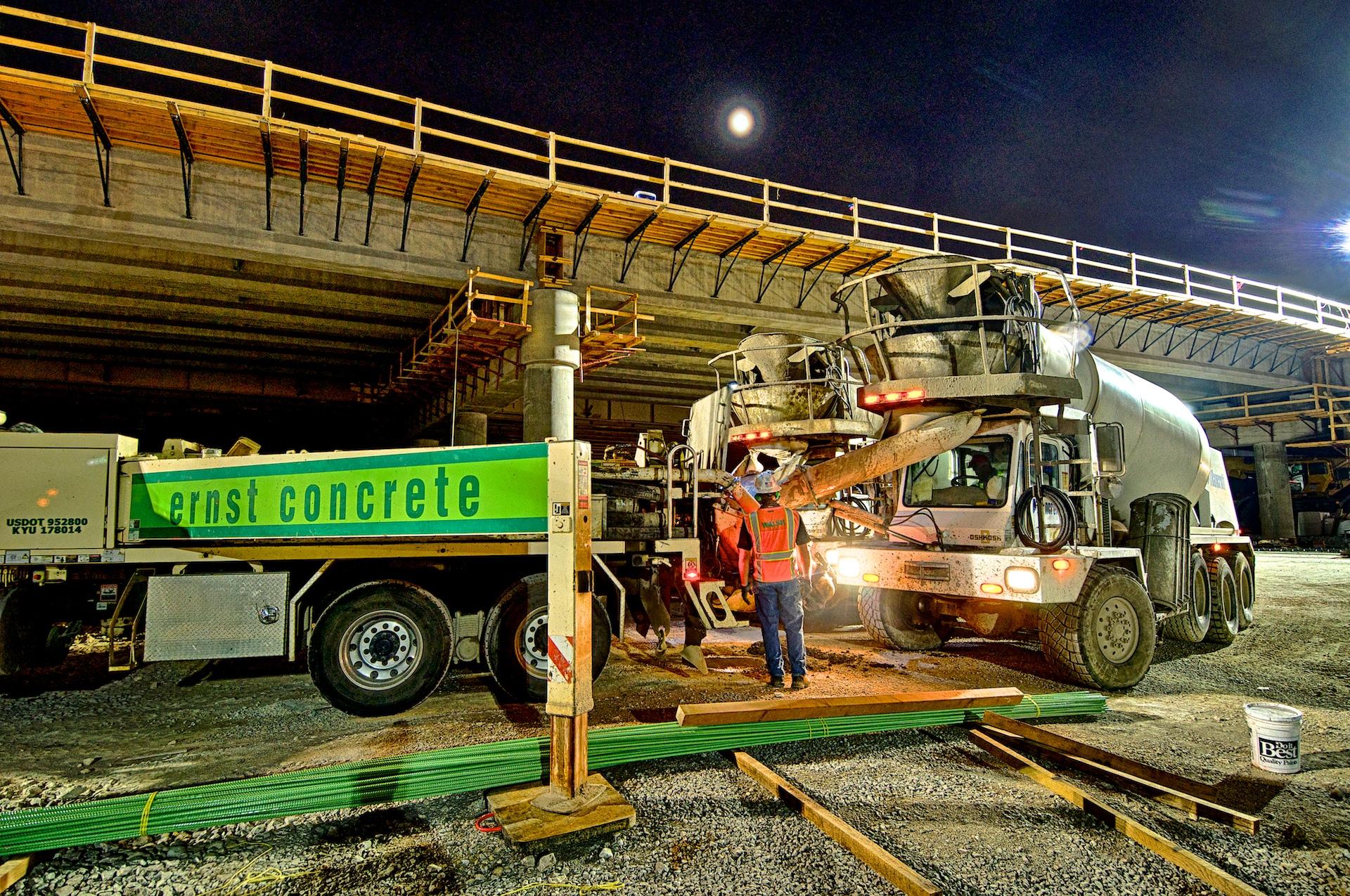
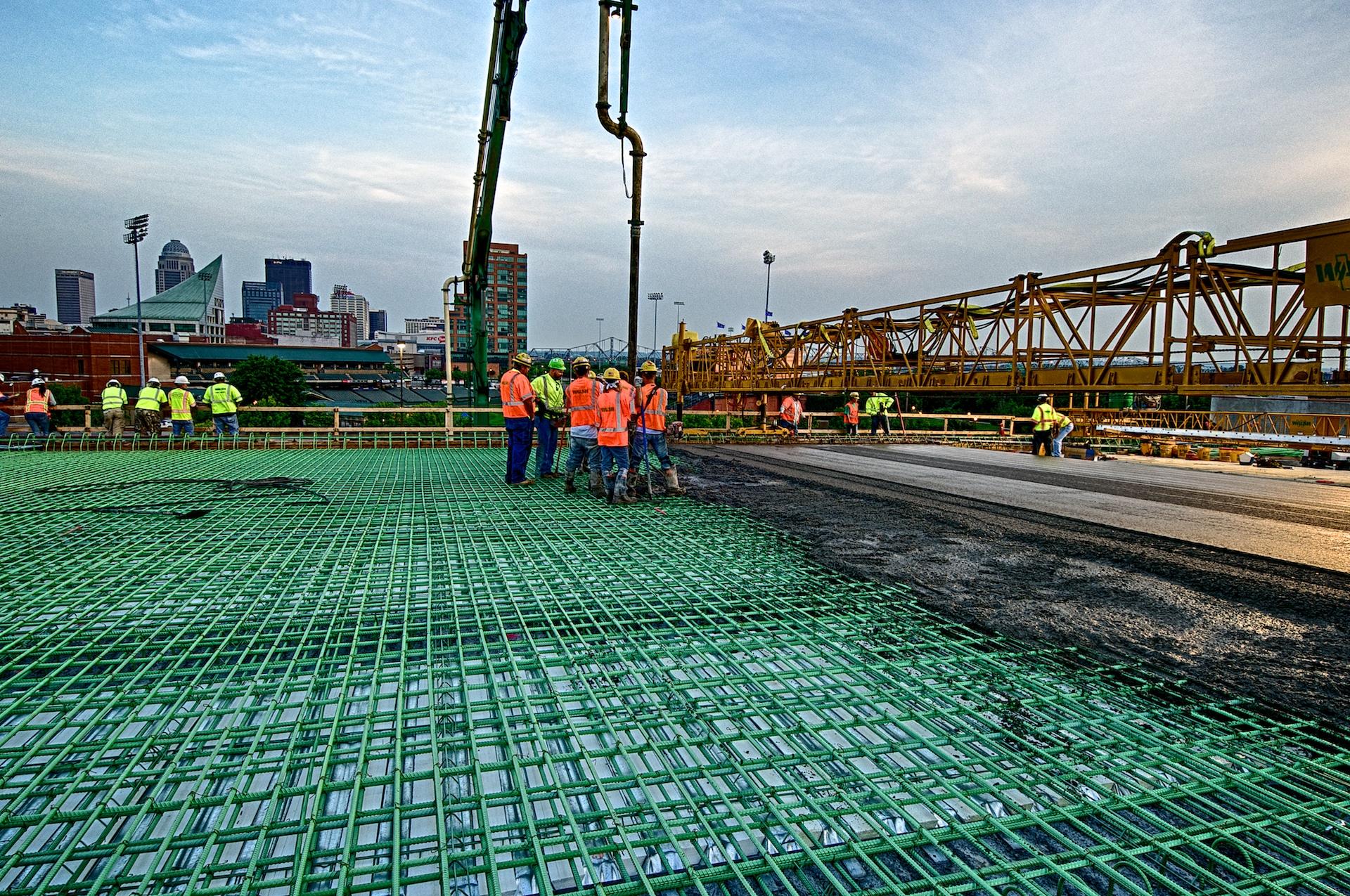
Tag: Walsh Construction

Frank Lobody Repairing A Drill Shaft at the Ohio River Bridges Project

Frank Lobody, Mechanic, International Union of Operating Engineers repairing a drill shaft for the BG-40 Drilling Machine. #1
Frank Lobody, Mechanic, International Union of Operating Engineers repairing a drill shaft for the BG-40 Drilling Machine at the Ohio River Bridges Project in Louisville, Kentucky May 2014

Click on the image to enlarge it in a separate window.

Today’s images are of Frank Lobody, a mechanic for Walsh Construction, who travels from job site to job site throughout the US to handle heavy equipment repairs. Frank is a member of the International Union of Operating Engineers, Local 150 in Porter, Indiana. When I met Frank he was repairing a drill shaft for the BG-40 Drilling Machine being used in Louisville to drill into the bedrock for the bridge piers on the Ohio River Bridges Project.

Frank Lobody, Mechanic, International Union of Operating Engineers repairing a drill shaft for the BG-40 Drilling Machine. #2
Frank Lobody, Mechanic, International Union of Operating Engineers welding on a drill shaft for the BG-40 Drilling Machine. 

Click on the image to enlarge it in a separate window.

The bedrock on the Ohio River Bridges Project is very hard and sometimes the drill shaft breaks under the load of trying to drill over 30 feet into it. Once the bridge pier casings are placed through the soil down to the bedrock it is necessary to drill a socket 30 feet into rock to anchor the piers. On the Kentucky side of the river that means drilling almost 150 feet from the surface to the bottom of the socket.

Frank Lobody, Mechanic, International Union of Operating Engineers, Local 150, Porter, Indiana

Click on the image to enlarge it in a separate window.

All three of these HDR images were processed from a three frame bracket set of +2, 0 and -2 EV exposures using NIK HDR Efex Pro 2 and Aperture 3 software.
 

Paving a New Southbound I-65 Bridge Deck

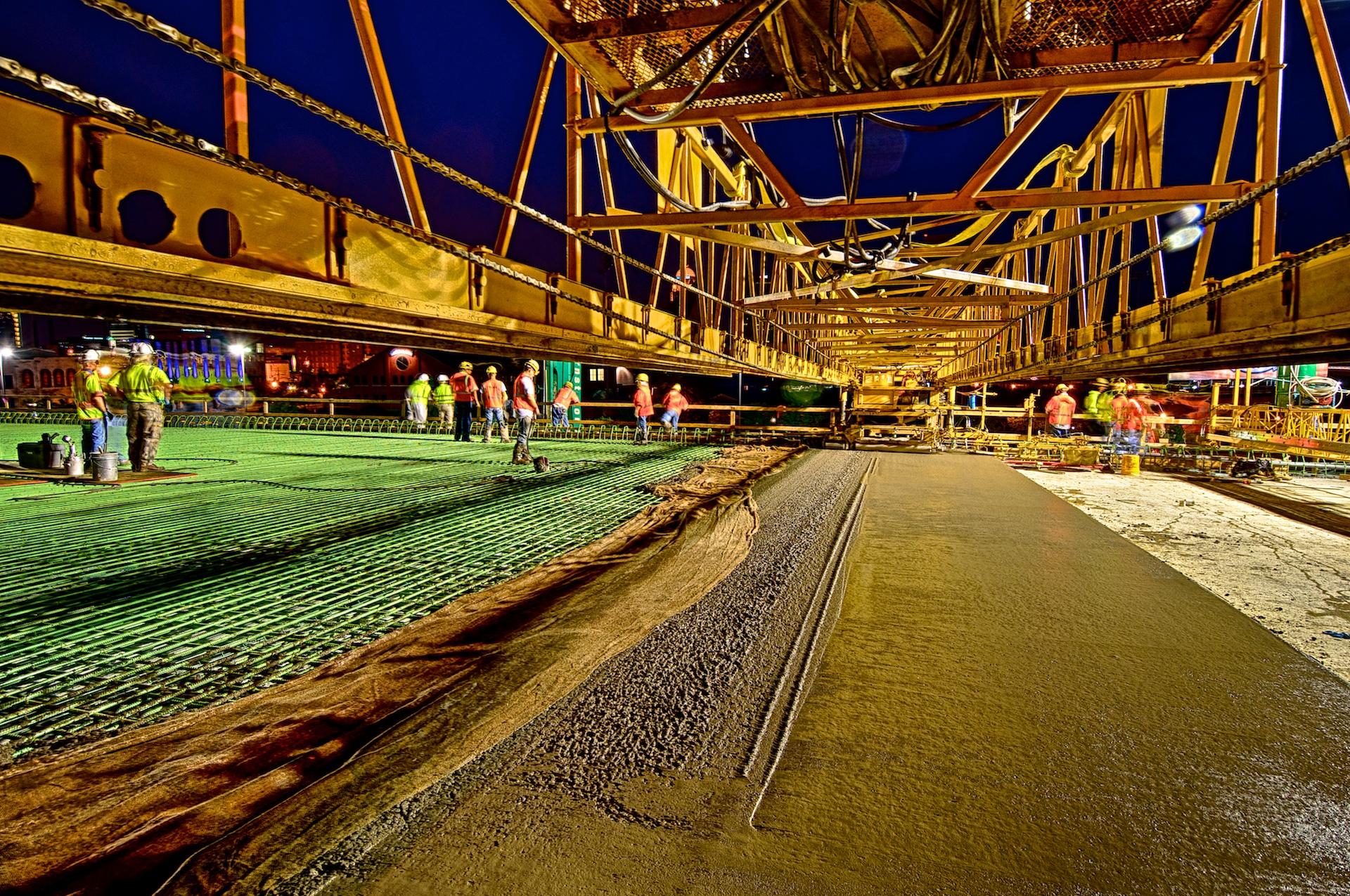
Underneath the Bidwell Machine

Click on the image to enlarge it in a separate window.

Today’s post is a few images of the process of paving the roadway on the new section of Southbound I-65 here in Louisville. In the process of constructing the new downtown bridge there are over 200 additional spans that are being built as the highway passes through Louisville. The photos here are part of the paving of just one of those spans.

The first photo was taken around 4:00 AM while the paving machine was at rest. I think the paving machine is known as a Bidwell Machine because that is who manufactures them. I heard several Operating Engineers refer to it as the “Bidwell” which is why I think I’m correct in calling it that. At any rate this machine spreads and finishes the concrete after the laborers have placed it on the deck using a large hose and a concrete pump to raise it from ground level below the roadway onto the new roadway.

The crew was waiting for the concrete that was being pumped to be certified that it was the correct composition and consistency for use. While that testing process was taking place the leading edge of the fresh concrete already in place was covered with burlap blankets and kept wet so that there wouldn’t be a problem when the pouring resumed. The men on the left side of the image are the quality inspectors and work for the Kentucky Department of Transportation. It is their job to verify that all concrete and construction materials and processes are within the specifications required for proper and safe construction of the roadway.

Very often when we laymen see a construction site we may think that folks are standing around doing nothing. The reality is that there are many facets to a construction project that temporarily halt work but everyone we see is an integral part of the process. I like to think of it as similar to a football game. The team is simply waiting for the ball to be snapped and then everyone has a role to play in an effort to complete the play. In this case the ball is waiting for the officials to place it on the scrimmage line and blow the whistle for the game to resume.

Concrete Pump Snorkel
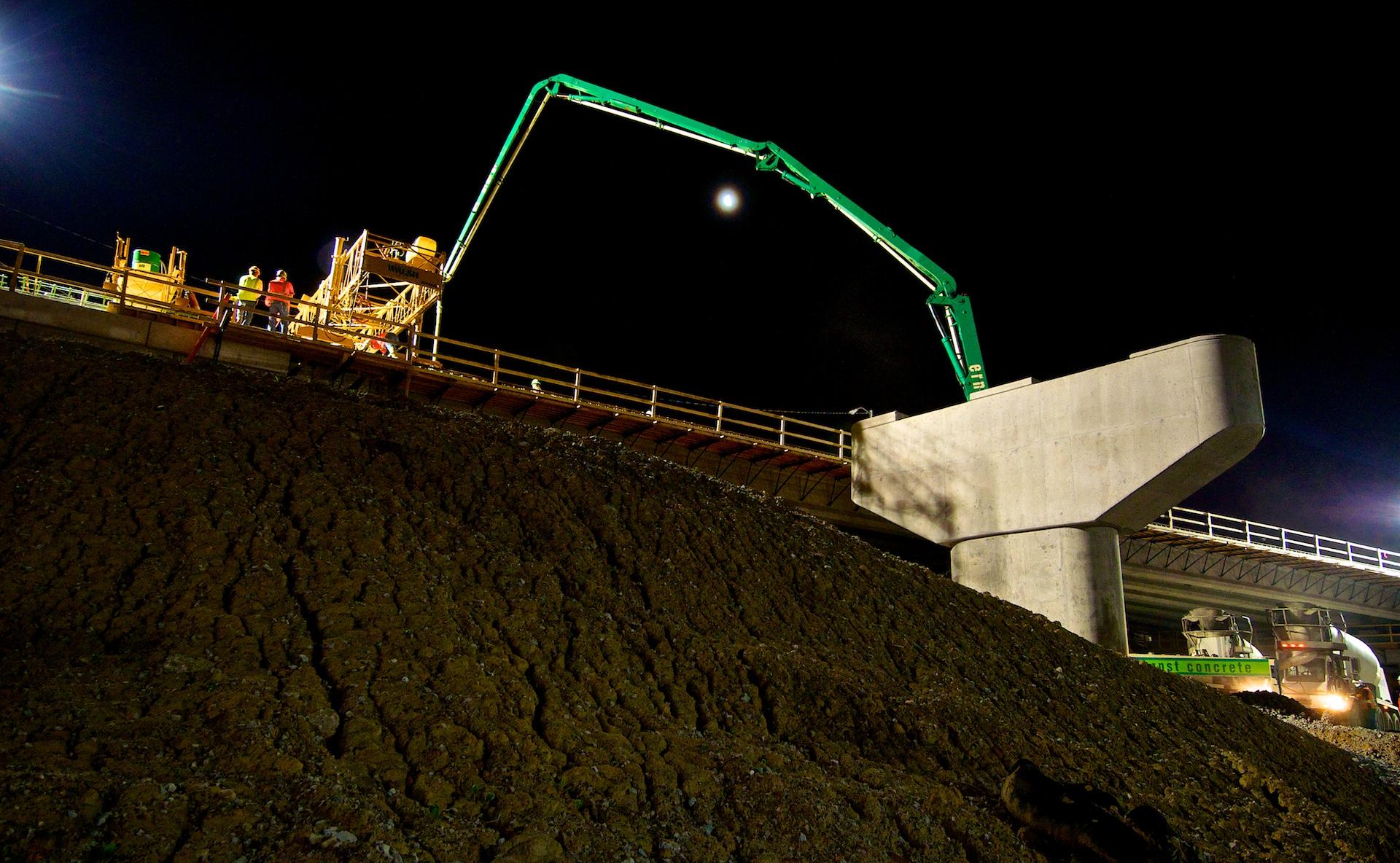
Concrete Pump Boom

Click on the image to enlarge it in a separate window.

THis image shows the concrete pump boom that is used to place the concrete on the roadway. In the lower right side you can see two concrete trucks positioned to feed wet concrete into the hopper on the pump. The pump operator then delivers the wet mix through the boom and hose to another operator on top who actually directs the placing of the boom using a joy stick apparatus that he wears on his shoulders. Finally there is a laborer who is aiming the snorkel on the end of the hose to place the concrete where it needs to be.

Feeding the concrete pump

Click on the image to enlarge it in a separate window.

This image shows the concrete pump and the two concrete delivery truck that are required to feed it. These truck are just two of many that were delivering concrete to the pump that morning. As soon as they had offloaded their concrete another pair replaced them; this went on for hours as truck after truck delivered more material. In this case there were over 50 loads of concrete delivered just to pour one span of the new roadway.

Pumping the concrete
Pumping the concrete requires communication and direction.

Click on the image to enlarge it in a separate window.

As you can see by this image the sun has started to rise and the concrete pour has progressed further south. I couldn’t hear what was being said but clearly this was a moment when people were learning what the next actions they needed to take would be  once the next batch of concrete started flowing from the concrete pump.


Abstracts and Close-ups From the Ohio River Bridges Project Construction Site

Caisson Connectors
Caisson Connectors

Click on the image to enlarge it in another window.

When I am out on the job site shooting I like to include abstracts and close-ups from the construction site  in my workflow. I find the visual elements of a pile of bolts, an impression left by a tire tread and manmade vs organic shapes very interesting. As a photographer I am very attuned to seeing art in the mundane day to day elements that surround me when I’m in the field shooting and strive to share that beauty with the viewers of my images.

The bolts in the image above are used in the assembly of the caisson in the background. I shot these as a three frame bracket set and merged them into a single HDR image using NIK HDR EFex Pro 2. After merging them and applying the Balanced preset I returned the merged file to Aperture 3 for final adjustments to color, sharpness, contrast and saturation.

Abstract close-up of construction components.

Click on the image to enlarge it in another window.

Due to the need to capture images throughout the workday I often find myself shooting in some pretty harsh lighting conditions which I compensate for by using bracketed exposures and HDR processing. By capturing a three frame bracket of +2, 0 and -2 EV exposures I am able to gather detail in the highlights and shadows and merge that data in my HDR software of choice NIK HDR Efex Pro 2. Generally my merger procedure is to apply the Balanced preset with as little anti-ghosting as possible in order to maintain the detail in the images. Because I shoot almost all my daytime construction images handheld I find anti-ghosting to be one of the most important settings to monitor during processing of an HDR image. I am fairly sure that the use of anti-ghosting compensates for minor camera movement and aids in aligning the three frames I usually shoot in my bracket set.

Crane Mat Timbers
Crane Mat Timbers

Click on the image to enlarge it in another window.

Whenever the cranes on tracks are set up they are almost always sitting on these heavy timber crane mats. The timbers are about 12″ x 12″ in cross section and then they are bolted together into slabs of several timbers. These slabs are leveled and placed on the ground to spread the weight of the construction crane evenly and make a stable platform for the crane to work from.

I came across this stack of crane mats and was drawn to the colors and textures of their surfaces. These crane mats were stored in a shaded area of the job site and the light was very low. By using a bracketed series of three exposures I was able to capture a wide dynamic range and bring out the texture, colors and detail in the image. This is another example of why I love using HDR techniques to photograph on the job site. The broad dynamic range provided by the bracket set allows me to make decisions about how I want to portray the subject in the final image and what elements are most important to me in the final photo.

Earth Compactor Pattern

Click on the image to enlarge it in another window.

I shot this image because I liked the pattern and contrast  that the earth compactor teeth left in the earth with the organic fissures between the machine made impressions.


WDRB TV Interview about my Ohio River Bridges Series.

Last week I was interviewed by WDRB TV, here in Louisville, about my ongoing series of photos documenting the Ohio River Bridges Project . The bridge is being built by Walsh Construction Company which has granted me exclusive access to all areas of the project.

The YouTube video below is from the WDRB TV Interview that appeared on Sunday May 11, 2013.


Hank Botterman Visits The Ohio River Bridges Project During Safety Week

Lee Carson, Crew Boat Captain with Hank Botterman Corporate Director of Safety, Walsh Construction, meet on the crew boat during Hank's Visit to The Ohio River Bridges Project.
Lee Carson, Crew Boat Captain with Hank Botterman Corporate Director of Safety, Walsh Construction, meet on the crew boat during Hank’s Visit to The Ohio River Bridges Project.

Click on the image to enlarge it in a separate window.

Yesterday Hank Botterman Corporate Director of Safety for Walsh Construction was touring the Ohio River Bridges Project with the ORB Safety Team. One of the men he met and talked with was Lee Carson the Crew Boat Captain. They discussed safety precautions that Lee takes for when the conditions on the river are challenging as well as sharing their thoughts regarding safety on the river.