This article is about using Long Exposure and HDR techniques to emphasize movement while taking advantage of high dynamic range photography.
Tag: transportation
Exploring and Building Presets In Topaz B&W Effects and NIK Analog Pro Plugins
This post looks at using Topaz Software with various NIK Software to create your own plugin presets for HDR photography.
Sam’s Volvo Build
Click on the image to enlarge it in a separate window.
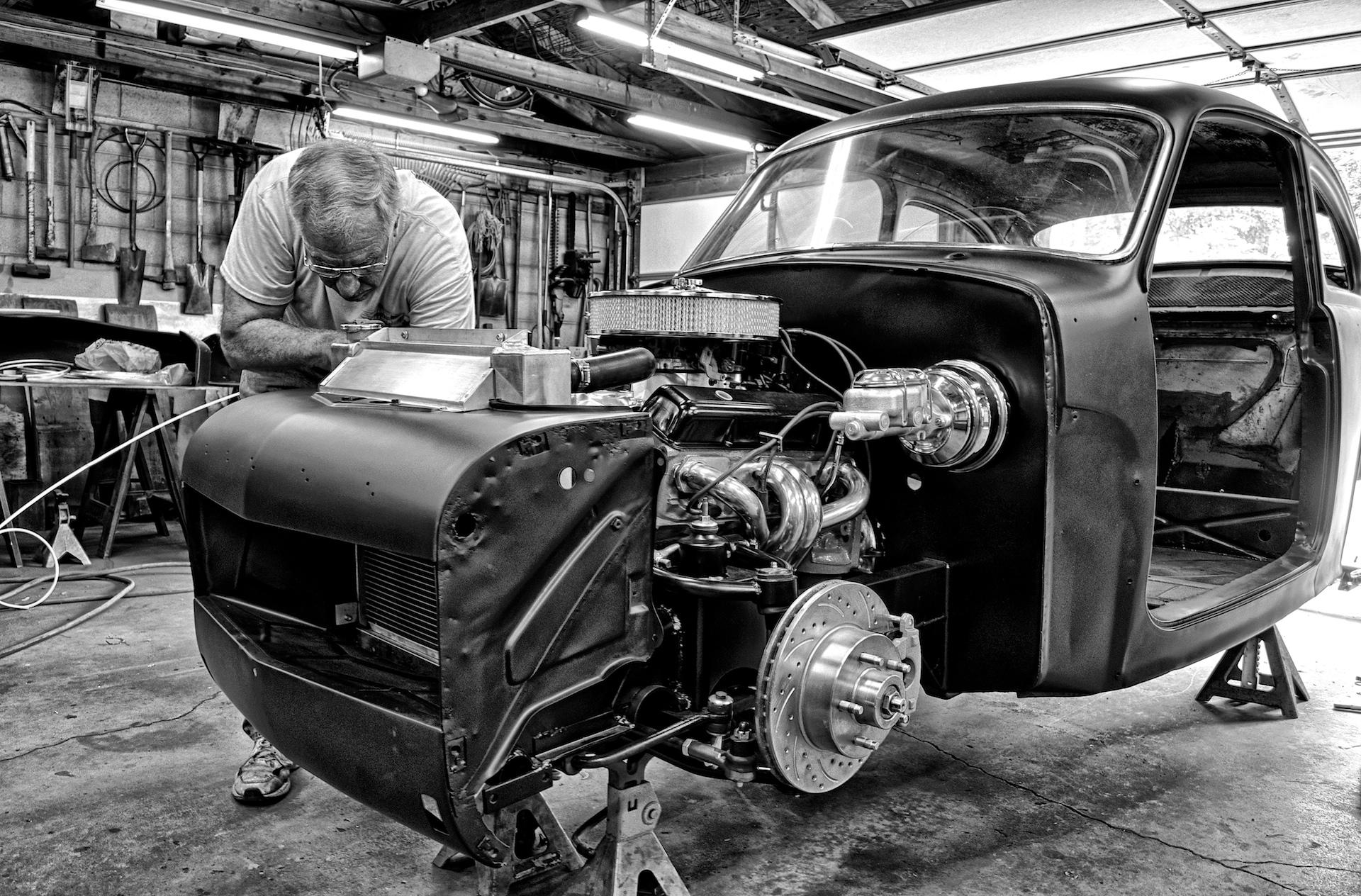
This photo of my friend Sam was taken when he was building a Volvo streetrod in 2013. Sam is an incredibly talented car builder with several cars to his name. He usually chooses cars that other folks ignore for one reason or another. His past projects include a Ford Anglia, Nash Rambler, 53 Willys Hardtop, 60 Ford Falcon and a 60s Studebaker Lark. His reputation for sound construction has people lining up to buy his creations even before they are finished. Sam likes them “loud and nasty” and he usually manages to stuff a V-8 into these small cars.
Sam’s passion is chassis engineering and he likes to work with unibody cars. This Volvo was the latest one to roll out his shop door and like all most of his previous builds it was sold in a matter of days. I always enjoy a visit to his garage because I never know what he’s going to tackle next. The night I shot this image he was totally engrossed in what he was working on and that gave me a chance to shoot without his knowing what I was shooting.
This image is a black and white conversion of a color HDR image that I converted using Aperture 3. All adjustments were done with the tools in Aperture 3 which is still my favorite image editing software. I entered it last night in the Louisville Photographic Society monthly competition for “People Working” and it took First Prize.
Click on the image to enlarge it in a separate window.
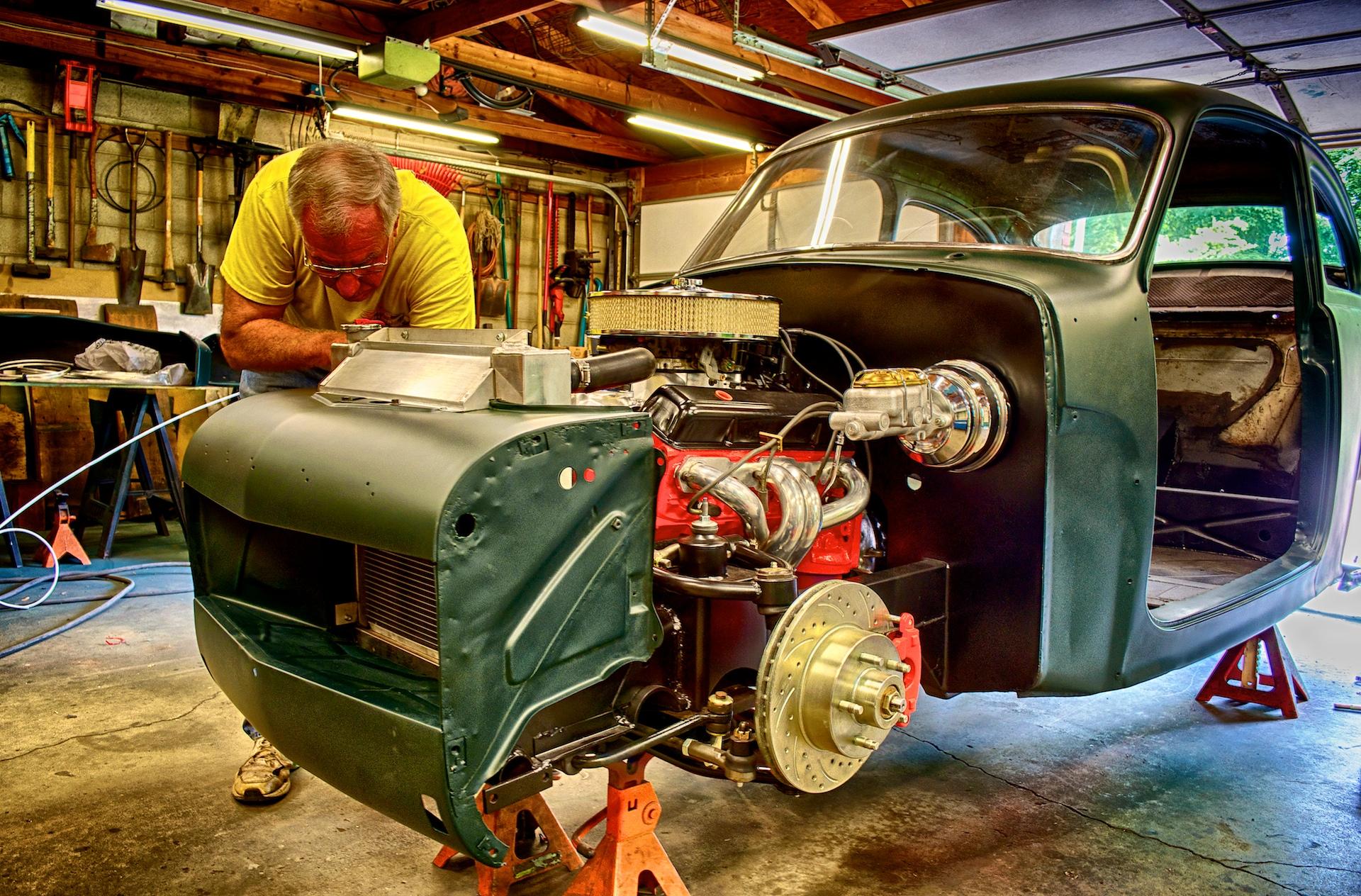
I am including the color HDR version that I used to show the difference that the two processes have on the same image. This image is from a three frame bracket set of +2, 0 and -2 EV exposures that I merged using NIK HDR Efex Pro 2 and completed in Aperture 3.
Click on the image to enlarge it in a separate window.

Click on the image to enlarge it in a separate window.
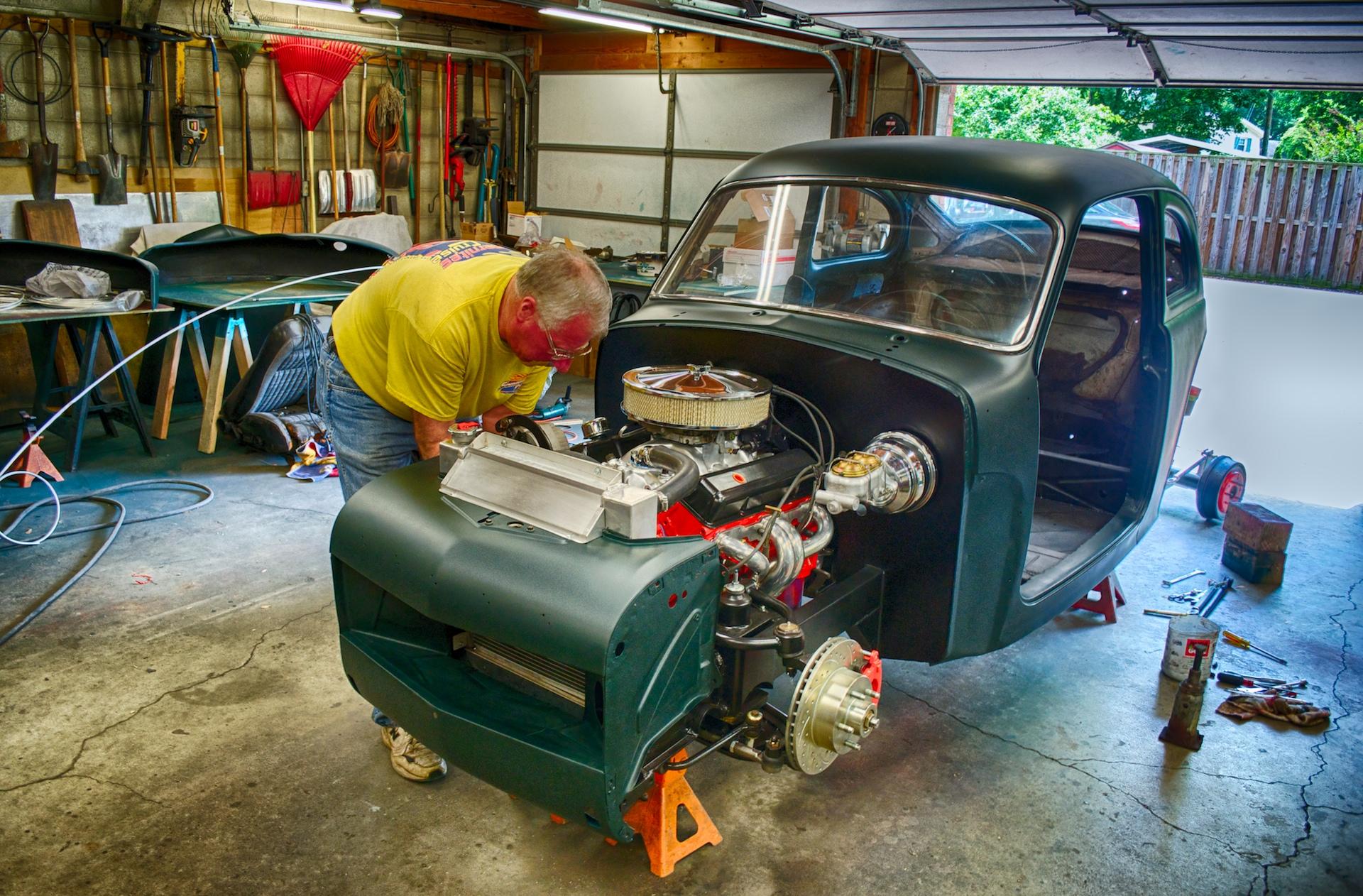
I’ll finish this post with another color HDR image that I processed as a black and white using a preset in NIK HDR Efex Pro 2 that I adjusted to my taste. One thing to notice is the way that HDR allowed me to expose for the shadows in the garage and also expose another frame that allowed the fence and the outdoors to render in the final image.
Viewing the Ohio River Bridges Project from the Tower Crane on Pier Four
Several photographs from inside the mast of the tower crane on the Ohio River Bridges Project in Louisville, Kentucky being built by Walsh Construction
Paving a New Southbound I-65 Bridge Deck
Click on the image to enlarge it in a separate window.
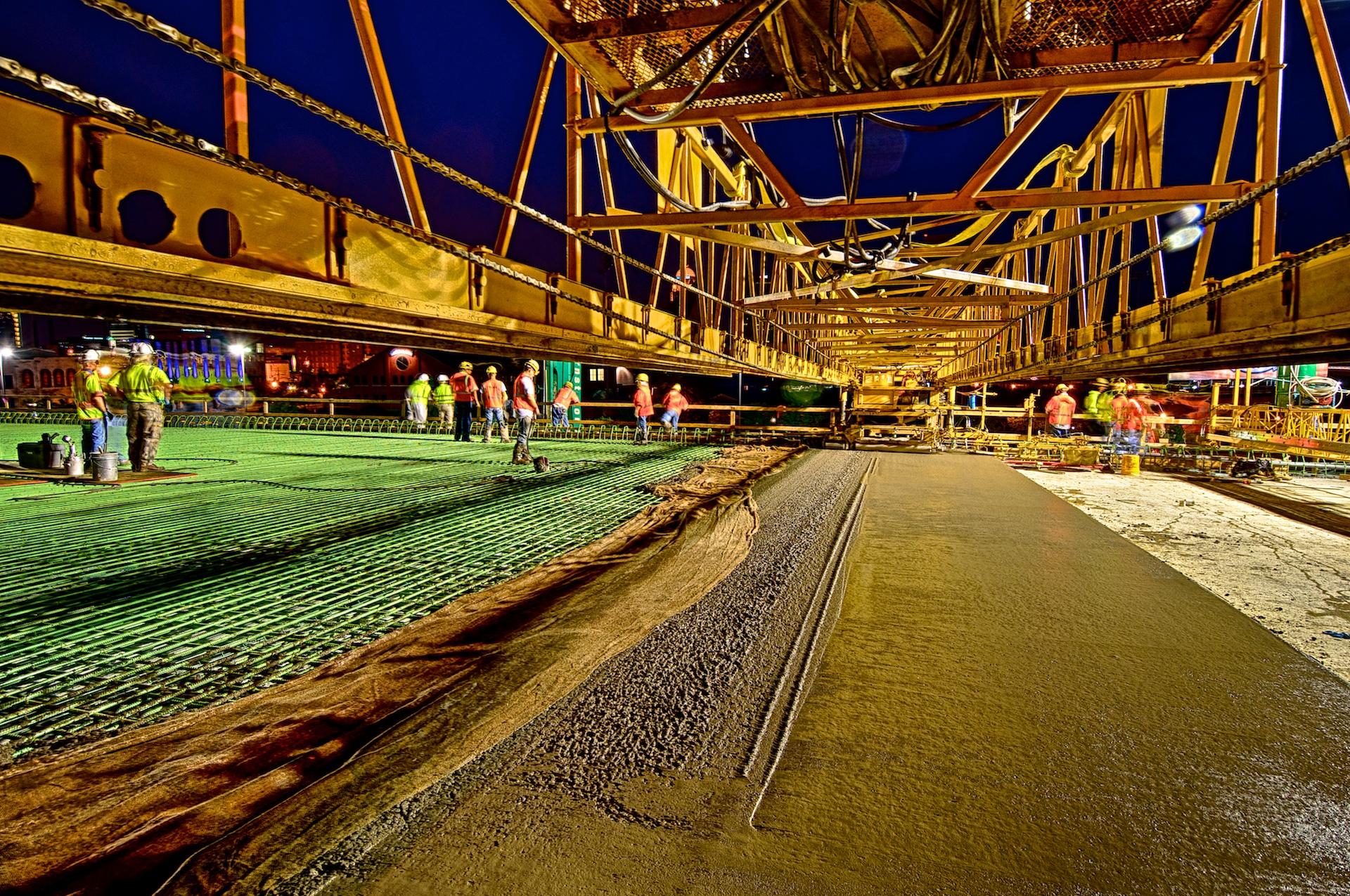
Today’s post is a few images of the process of paving the roadway on the new section of Southbound I-65 here in Louisville. In the process of constructing the new downtown bridge there are over 200 additional spans that are being built as the highway passes through Louisville. The photos here are part of the paving of just one of those spans.
The first photo was taken around 4:00 AM while the paving machine was at rest. I think the paving machine is known as a Bidwell Machine because that is who manufactures them. I heard several Operating Engineers refer to it as the “Bidwell” which is why I think I’m correct in calling it that. At any rate this machine spreads and finishes the concrete after the laborers have placed it on the deck using a large hose and a concrete pump to raise it from ground level below the roadway onto the new roadway.
The crew was waiting for the concrete that was being pumped to be certified that it was the correct composition and consistency for use. While that testing process was taking place the leading edge of the fresh concrete already in place was covered with burlap blankets and kept wet so that there wouldn’t be a problem when the pouring resumed. The men on the left side of the image are the quality inspectors and work for the Kentucky Department of Transportation. It is their job to verify that all concrete and construction materials and processes are within the specifications required for proper and safe construction of the roadway.
Very often when we laymen see a construction site we may think that folks are standing around doing nothing. The reality is that there are many facets to a construction project that temporarily halt work but everyone we see is an integral part of the process. I like to think of it as similar to a football game. The team is simply waiting for the ball to be snapped and then everyone has a role to play in an effort to complete the play. In this case the ball is waiting for the officials to place it on the scrimmage line and blow the whistle for the game to resume.
Click on the image to enlarge it in a separate window.
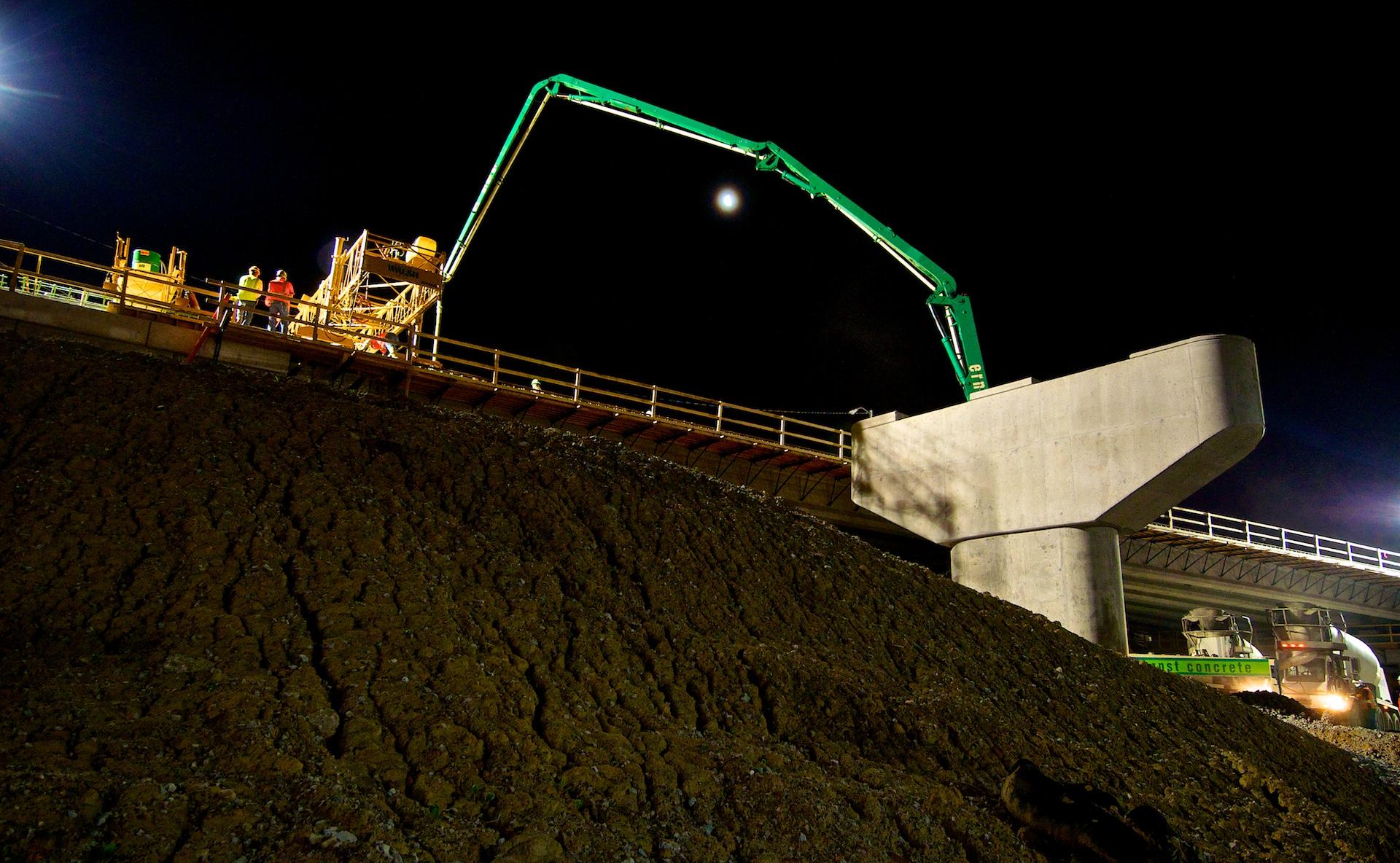
THis image shows the concrete pump boom that is used to place the concrete on the roadway. In the lower right side you can see two concrete trucks positioned to feed wet concrete into the hopper on the pump. The pump operator then delivers the wet mix through the boom and hose to another operator on top who actually directs the placing of the boom using a joy stick apparatus that he wears on his shoulders. Finally there is a laborer who is aiming the snorkel on the end of the hose to place the concrete where it needs to be.
Click on the image to enlarge it in a separate window.
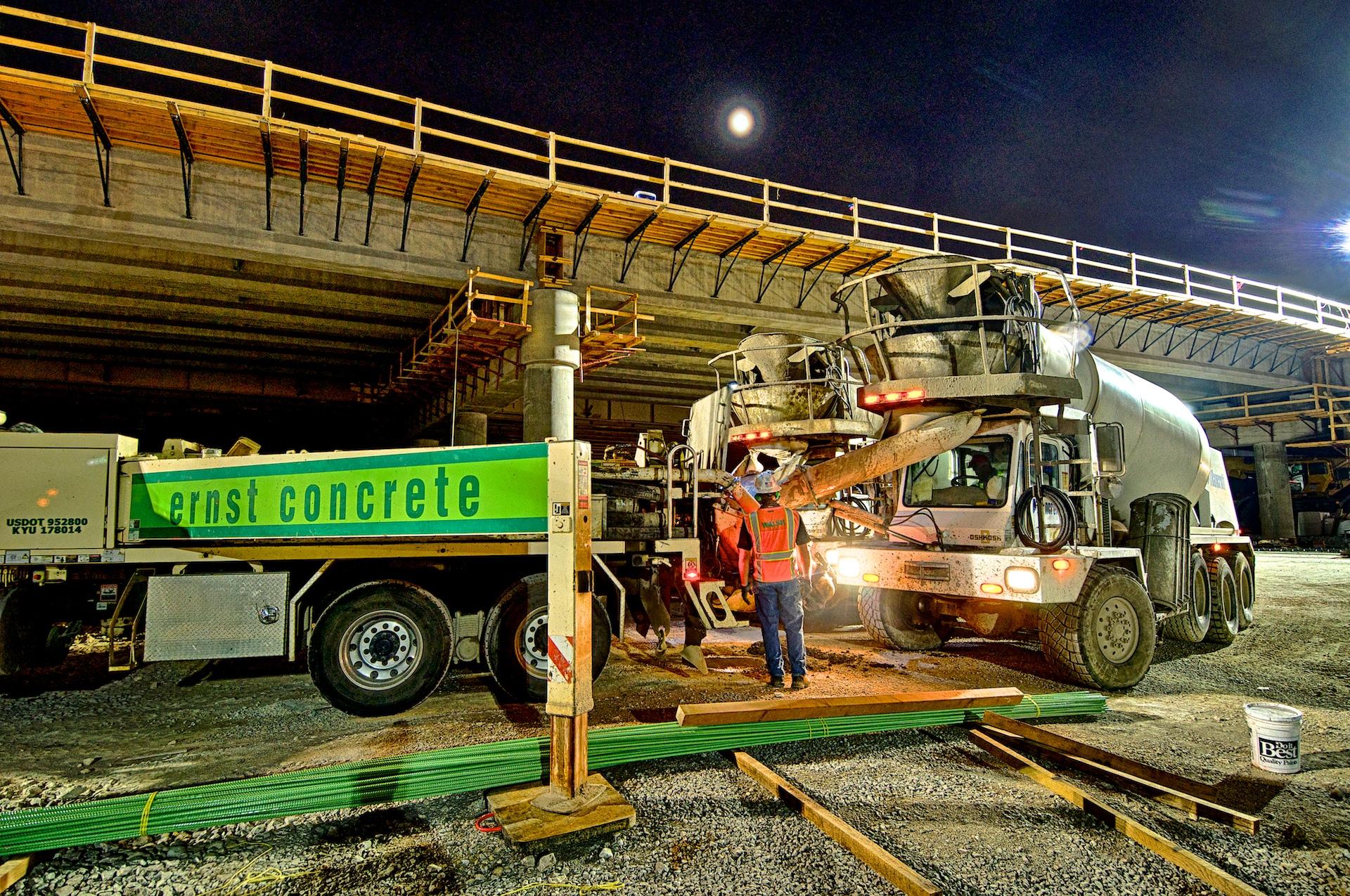
This image shows the concrete pump and the two concrete delivery truck that are required to feed it. These truck are just two of many that were delivering concrete to the pump that morning. As soon as they had offloaded their concrete another pair replaced them; this went on for hours as truck after truck delivered more material. In this case there were over 50 loads of concrete delivered just to pour one span of the new roadway.
Click on the image to enlarge it in a separate window.
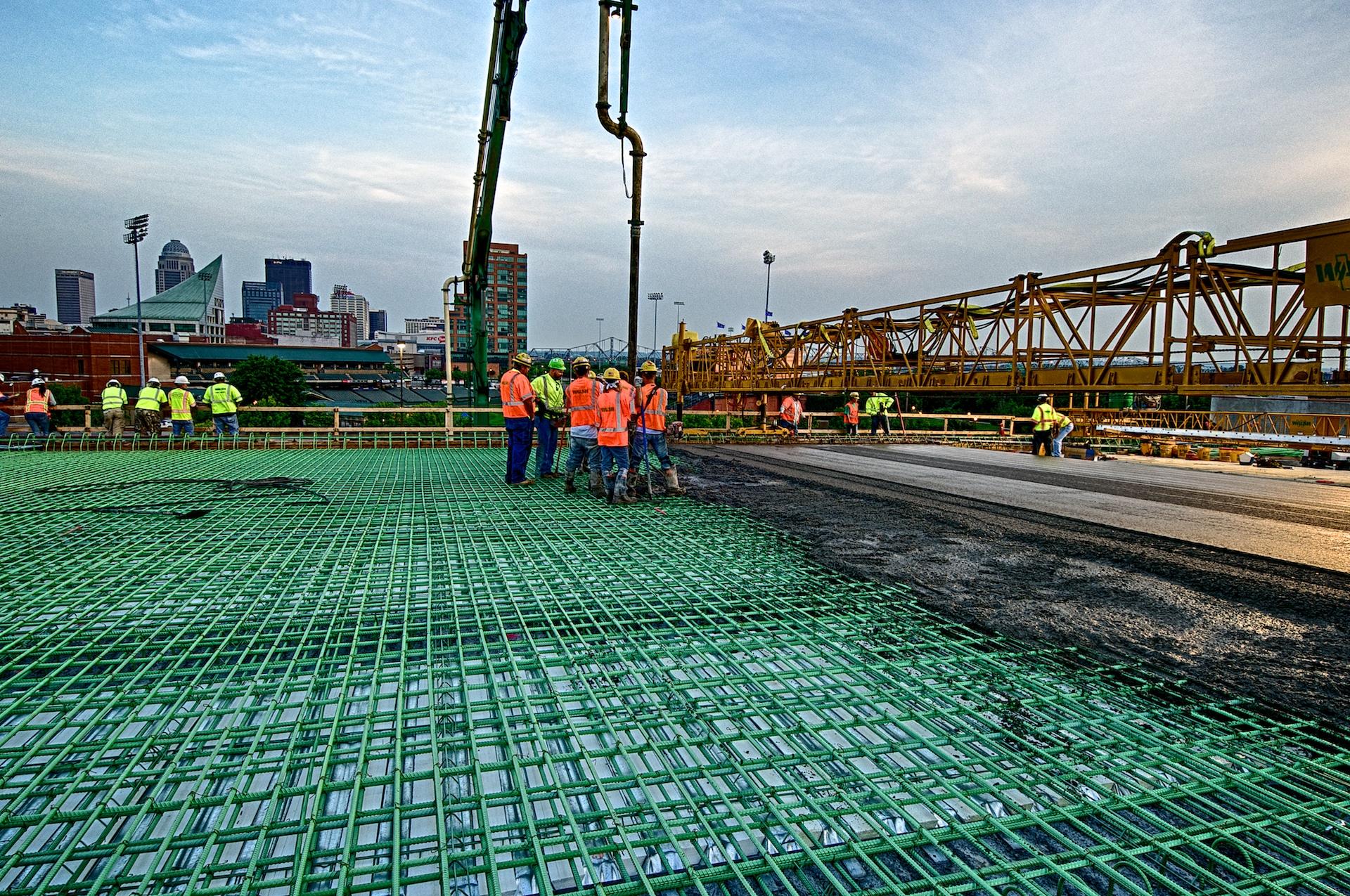
As you can see by this image the sun has started to rise and the concrete pour has progressed further south. I couldn’t hear what was being said but clearly this was a moment when people were learning what the next actions they needed to take would be once the next batch of concrete started flowing from the concrete pump.